Have you ever wondered how your computer knows what to do? The answer lies in the operating system, or OS. One of the oldest and most influential operating systems is DOS, or Disk Operating System. DOS is like a command center that tells the computer what to do and how to do it. Unlike modern operating systems, DOS uses text-based commands instead of graphical user interfaces. While it may seem simple and primitive, DOS is also fast, powerful, and flexible. However, it also has its drawbacks, such as its complexity and obsolescence. In this article, we will explore the fascinating world of DOS.
Posts
Featured post
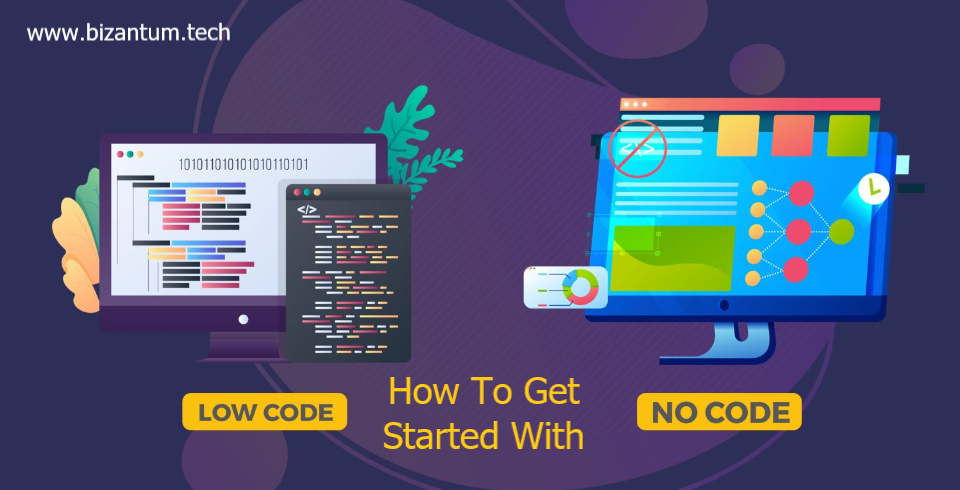
How To Get Started With No-Code and Low-Code
By
Bizantum
Imagine your boss asks you to develop custom software for your company. But you and your team don’t have the time or experience in coding. And there’s no developer available at the moment as well. Panicking? Well, don’t. With low code/no code programming, you don’t have to be a developer to do any programming-related task. In recent years, many platforms have made it possible for programmers with little to no development experience to deliver software while meeting the needs of professional developers under time pressure. Without worrying about the specifics of underlying operating systems or scalability needs,
Recent posts
By
Bizantum
Did you know that 2.5 quintillion bytes of data are created every day? That’s equivalent to 250,000 Libraries of Congress, or 5 million laptops! In this ocean of data, how do we make sense of it all? That’s where data analysts come in. Data analysts are the detectives of the digital world, using their skills and tools to uncover patterns, trends, and insights from data. They help businesses and organizations make informed decisions, solve problems, and seize opportunities. Whether it’s predicting customer behavior, optimizing marketing campaigns, improving healthcare outcomes, or enhancing educational experiences, data analysts play a crucial role in shaping our world.
By
Bizantum
A Data Warehouse serves as a centralized repository for storing and managing structured data from various sources, enabling businesses to perform advanced analytics, generate insightful reports, and make data-driven decisions. Unlike traditional databases, data warehouses are designed to handle vast amounts of historical data, supporting trends analysis and strategic planning. By organizing data in a consistent and reliable way, data warehouses empower organizations to streamline operations, enhance decision-making, and gain a competitive edge in their respective industries.
By
Bizantum
GitHub is a powerful and widely-used web-based platform designed for version control and collaboration , especially for developers. Built upon Git, it allows users to store, manage, and track their code projects efficiently. Beyond its repository-hosting capabilities, GitHub fosters teamwork by enabling developers to work together seamlessly, review changes, and contribute to open-source projects from anywhere in the world. Whether you're a seasoned programmer or a beginner, GitHub provides essential tools to streamline coding and project management in one centralized platform. But what exactly is it? In this article, we’ll break down everything you need to know about this essential tool for collaborative coding.
Are you tired of dealing with tedious manual tasks, like cleaning data or creating reports? Do you want to get more insights from your data and make better-informed decisions? If so, you’re in luck because Python can help!. Now, you may be thinking, “Python? Isn’t that a type of snake?” Well, yes, it is. But in this case, we’re talking about a different type of Python, one that doesn’t bite (unless you forget to close your parentheses). Python is a powerful programming language that can help you automate tasks, analyze data, and create predictive models. It may sound scary if you’re not a coder or a tech-savvy person, but don’t worry!
It’s no surprise that many beginning coders choose to learn Python. For years now, Python has gained a reputation as one of the most versatile and easily learned programming languages out there. As Python continues to evolve to meet the growing needs of innovative new technology sectors like machine learning and data science, the rewards for becoming well-versed in Python for developers continue to grow also. But there is a difference between knowing the basic structures of Python, and progressing to the more advanced concepts (such as data structures and data visualization) that more advanced software and machine learning applications require.
Search
Get new posts by email
-
All Posts
151
-
2024
101
-
May 2024
2
-
June 2024
19
-
July 2024
17
-
August 2024
7
-
September 2024
13
-
October 2024
9
-
November 2024
13
-
December 2024
21
-
May 2024
2
-
2025
50
-
January 2025
34
-
February 2025
3
-
March 2025
13
- What is a domain name?
- What is REST API?
- What is a database and how does it work
- How to use Python to automate your Social Media po...
- What is Random Access Memory (RAM)?
- What is error 404 and what does it mean exactly?
- Basic and Intermediate Python, and Data Structures
- How to use Python if you work in Marketing
- What is Github?
- What is a DataWarehouse and how can you benefit fr...
- What does a data analyst do?
- What is DOS?
- How To Get Started With No-Code and Low-Code
-
January 2025
34
-
2024
101